One depot can’t be everywhere.
Demand is spread across a city. A single central facility is far from most of the fleet most of the time, so vehicles make long detours for short service calls.
Parking · Charging · Fleet services
Robots should wait for people, and charge while they wait. XoomPark is connecting existing parking, charging and service businesses into a ground network for autonomous fleets. We coordinate access, availability and services so fleets can operate near riders and property owners can earn on their terms.
A new era of transportation. Built on places you already own.
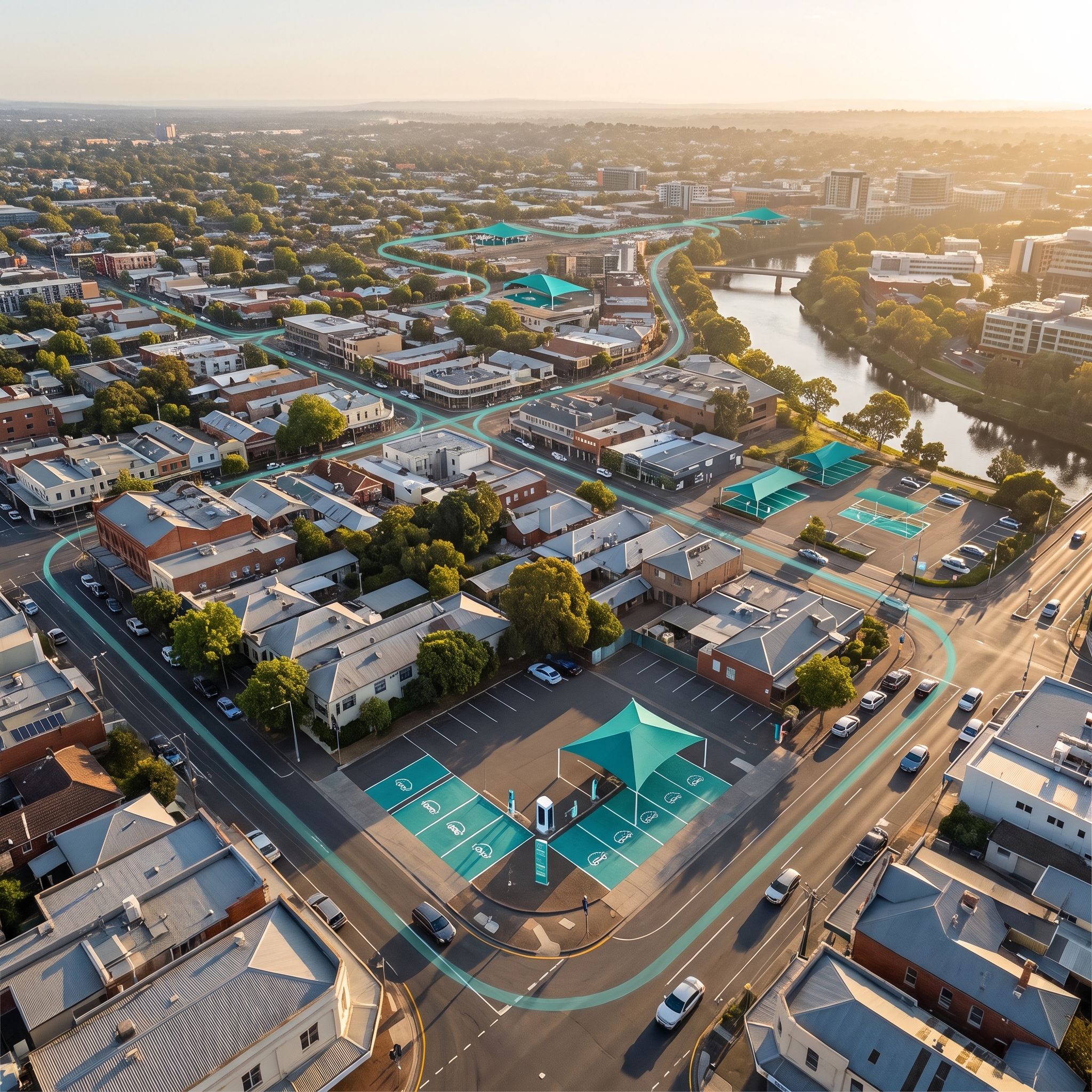
Fleets will always need big depots for heavy work. For a charge, a clean or a place to wait, closer to riders wins, and those sites already exist.
The Problem
An autonomous vehicle earns while it drives. Every minute spent repositioning to a central depot, to charge, get cleaned, or wait, is time it isn't earning. The fix isn't a bigger depot. It's a different shape of infrastructure.
Demand is spread across a city. A single central facility is far from most of the fleet most of the time, so vehicles make long detours for short service calls.
Repositioning miles burn energy, vehicle life and capital while earning nothing. They’re the largest controllable cost in the fleet’s day, and the one nobody prices.
Thirty bays spread across the city, placed inside actual operating zones, instead of thirty bays in one facility on the edge of town. Same total service capacity. A fraction of the deadhead.
What We’ve Built
Sites your vehicles can actually use, booked automatically by your dispatch software. Physical infrastructure that behaves like a dependable service.
Not every parking site can take an autonomous vehicle. XoomPark qualifies each one against a written standard before a single vehicle arrives: gate access the vehicle can clear on its own, verified cellular coverage at the gate and at the stalls, measured clearance on the full drive path, drive-aisle geometry, separate ingress and egress, and recovery access. Sites that don’t pass don’t join the network.
Every site is registered in XoomPark’s reservation system, and each bay is a bookable resource. Fleet dispatch queries availability, places an atomic hold, and confirms through the API. Holds are exclusive: no two vehicles can claim the same bay, and abandoned holds expire and release automatically.

At the Pit Stop
The same core services at every site, delivered by certified crews, with every visit recorded.
Top up inside the operating zone.
Charging is delivered on site by a mobile fast-charge partner, so a vehicle doesn’t have to travel to a charging hub for routine top-ups. Energy is billed at cost, with no XoomPark margin.
On a host’s station we use the unused stalls, never fill them so a retail customer can’t charge, and never push the host over its monthly peak. If the station fills, your vehicle leaves to free a stall.
A fast reset between rides.
Certified crews handle interior and exterior cleaning to a consistent standard, from a quick sensor-and-glass wipe to a full reset. We don’t do deep sensor cleaning, but on-site crew always has a fallback for it. Every visit is recorded with time stamps and photos.
Before small becomes serious.
Tire pressure, sensor checks, fault flagging, lost and found. The routine attention a vehicle needs regularly, without a trip back to a central depot.
How It Works
Your dispatch system calls the XoomPark API and gets available bays near the vehicle, filtered by service type and real-time availability.
An atomic hold locks the bay. No other request can claim it. Abandoned holds expire and release on their own.
The vehicle routes to the site and enters through an access method it can clear unattended. No coordination call, no waiting at a gate.
Charge, clean, light service. Whatever that vehicle needs, delivered by a certified crew.
Check-out is logged with time stamps and photo confirmation of the work performed, and returned to the fleet.
Who It’s For
Register your vehicles and get a recurring network membership. Access to every site, not a per-stop booking your team has to manage. Your dispatch system handles bookings through the API. One integration, then no one on your team touches a screen.
GET FLEET ACCESSHave parking that sits underused, or a surface lot near an AV operating zone? XoomPark brings the fleet demand, the service standard, and the crews. You provide the space and earn on stalls that weren’t earning. No capital required from you.
HOST A PIT STOPPlanning a Miami fleet? Read the fleet parking guides for site counts by neighborhood, storage, staging and washing.
Stop sending autonomous vehicles across the city for routine service. Get your fleet on the XoomPark network, or put your location on it.